LightBlog

mercredi 5 janvier 2022

Sony’s 2022 Bravia XR TV lineup includes new Mini LED TVs and the world’s first QD-OLED 4K TV

Sony is one of the biggest TV manufacturers out there and at CES 2022, the Japanese giant is taking the opportunity to showcase a new lineup of Mini LED and OLED TVs. Sony’s 2022 Bravia XR lineup sees the company finally jumping the Mini LED TV bandwagon with the Master series Z9K and X95K series while also introducing one of the first QD-OLED TVs.

Starting with the X95K and Z9K series, these are Sony’s first Mini LED TVs. The Z9K series offers 8K resolution in 75-inch and 85-inch sizes while the X95K delivers 4K in 65-inch, 75-inch, and 85-inch sizes. TVs come equipped with the new Bravia XR Processor which uses Sony’s in-house local dimming algorithm to control thousands of Mini LEDs, delivering increased brightness, high dynamic range, deep blacks, and vivid colors. Sony says its Mini LEDs don’t suffer from blooming — a common effect on Mini LEDs in which there’s a visible halo around bright highlights on a black background. Sony says its XR Backlight Master Drive algorithms ensure there’s almost no flare or halo around highlights. The Mini LEDs offer variable refresh rates up to 120Hz for smooth visuals and deliver exceptional sound thanks to the company’s Acoustic Multi-Audio system. Both the X95K and Z9K series run Google TV out of the box.

Sony Bravia Z9K Mini LED 8K

Sony has also announced the world’s first QD-OLED TV called the Bravia XR A95K. While Sony’s current OLED TVs use panels from LG Display, the new A95K model features a display made by Samsung Display. QD-OLED (quantum dot organic light emitting diode) is a hybrid display technology that combines the best of OLED and QLED. This allows QD-OLED to achieve deep black levels, vibrant colors, and higher brightness output compared to existing OLED panels. Similar to Mini LEDs, the A95K QD-OLED also supports variable refresh rate (VRR), content upscaling up to 4K, and runs Google TV out-of-the-box. The TV comes with a unique stand that lets the user mount the TV in the “front position” for the most immersive experience and “back position” which lets you set the TV close to a wall.

Finally, Sony has also refreshed the entry-level OLED lineup with the introduction of the A90K and A80K lineups. The A90K series comes in 42-inch and 48-inch sizes while the A80K line will be available in 55-inch, 65-inch, and 77-inch sizes.

Sony hasn’t detailed the exact pricing and availability of the 2022 Bravia XR TVs.

The post Sony’s 2022 Bravia XR TV lineup includes new Mini LED TVs and the world’s first QD-OLED 4K TV appeared first on xda-developers.


from xda-developers https://ift.tt/3ePOO5V
via IFTTT

mardi 4 janvier 2022

Samsung’s YouMake Project aims to take product customization to the next level

During its CES 2022 keynote, Samsung unveiled a host of new products, including the Samsung Freestyle projector, a new range of Micro LED, Mini LED, and Lifestyle TVs, and several new 4K monitors. In addition, the company announced the YouMake Project at the event, which will give consumers the option to personalize all products from the company from one central location.

In a press release highlighting the YouMake Project, Samsung notes that it empowers consumers to “choose and customize products based on what matters most to them, so they can enjoy a more personalized experience across devices.” The initiative takes Samsung’s Bespoke vision to the next level and will give buyers the option to customize everything from home appliances to smartphones and other products from the company.

During the keynote, Samsung said that the YouMake Project will launch on its website later this month, giving users a chance to personalize their Samsung smartphones, TVs, refrigerators, wearables, and more. The project’s website also includes a virtual showroom that helps users experience customized products before purchase.

It’s worth noting that Samsung has offered customization options for home appliances under the Bespoke banner for a while now. The company recently expanded the Bespoke range to include the Galaxy Z Flip 3 and the Galaxy Watch 4. The YouMake project aims to take things a step further and include all the other products from the company. At the moment, we’re not sure whether Samsung plans to merge its Bespoke range with the YouMake Project or not. However, that seems unlikely as Samsung also showcased a couple of new Bespoke products during the keynote, including Bespoke options for the Family Hub, French 3-Door and 4-Door refrigerators, dishwashers, ranges and over-the-range microwaves, Jet vacuum, and Washer and Dryer.

What’s your take on Samsung’s YouMake Project? Are you looking forward to customizing your own Samsung products? Let us know in the comments section below. Also, take a look at the rest of our CES 2022 coverage to keep track of all the recent announcements.

The post Samsung’s YouMake Project aims to take product customization to the next level appeared first on xda-developers.


from xda-developers https://ift.tt/32OU1Zm
via IFTTT

Qualcomm’s Snapdragon Ride Vision System will help guide self-driving cars

Qualcomm’s push into automotive wouldn’t be complete without a chipset dedicated to self-driving cars. The company’s Snapdragon Ride Vision System is an all-new software stack from Arriver paired with a 4nm SoC. It’s designed for an optimized implementation of front and surround cameras for automated driving (AD) and advanced driver assistance systems (ADAS).

Snapdragon Ride Vision System Info

Qualcomm is confident that this system is “one of the industry’s most scalable and open” systems when it comes to AD and ADAS. The company says that its flexible deployment options allow “for a common implementation of features and requirements, with functional safety/SOTIF support, across virtually all vehicle tiers and types”. Qualcomm has been working on both AD and ADAS for a while now, with the company first announcing its entrance to the space at CES in 2020.

The Snapdragon Ride Vision System can detect static road geometry such as lane markers and guard rails, dynamic objects such as vehicles, and pedestrians and cyclists. It also has traffic sign recognition for global regulatory requirements. Custom neural network architectures for the chipset’s enhanced perception is based on 8MP wide field of view cameras.

As Qualcomm puts it, it’s an open and customizable system, so car manufacturers will be able to chop and change it to fit their own needs. Qualcomm also says that it supports Over-the-Air (OTA) updates for ongoing feature enhancements.

“As we further collaborate with the automakers and Tier 1 suppliers, our latest Snapdragon Ride Vision System aims to address a growing need for a more open, adaptable and scalable platform for computer vision solutions,” said Nakul Duggal, senior vice president and GM, automotive, Qualcomm Technologies, Inc. “Snapdragon Ride focuses on the extensive automated driving needs of our customers, ranging from scalable SoCs to integrated AD stacks and development platforms, and tools, that provide a comprehensive solution for L2-L3 automated driving, while maintain the flexibility to accommodate automakers and Tier-1 suppliers to bring their preferred solutions.  The Snapdragon Ride Vision System can offer automakers the opportunity to customize more advanced driving experiences for every vehicle class.”

The Snapdragon Ride Vision System is expected to be available in vehicle production in 2024. Qualcomm has also announced that it is working with Renault Group on some connected car features with a “Digital Chassis” package of software and hardware developed by Qualcomm.

The post Qualcomm’s Snapdragon Ride Vision System will help guide self-driving cars appeared first on xda-developers.


from xda-developers https://ift.tt/3EVZJpd
via IFTTT

Samsung Freestyle is a projector with the software of a smart TV

There has been an ever-growing number of smart projectors over the past few years, which combine a standard wall projector with a built-in media system (usually some variation of Android). Anker has a few of them under its Nebula brand, and the Xiaomi Mi Smart Projector is another example. Samsung is now entering that market with the ‘Samsung Freestyle,’ one of the company’s major announcements at CES 2022.

Samsung says the Freestyle is “a projector, smart speaker and ambient lighting device all rolled into one lightweight, portable device.” It weighs 830 grams (1.82 pounds/29.2 ounces), and has a unique rotating case that allows it to rotate 180 degrees. Samsung says it can be powered with a standard USB-PD connection, as long as 50W/20V charging (or higher) is supported by the adapter or battery. There does not appear to be any internal battery, unlike most of the Nebula smart projectors sold by Anker — the Freestyle is definitely intended to be used indoors near a power source.

Samsung Freestyle

The rotating design allows it to switch between projecting on walls and ceilings without being propped up by other objects. Like most smart projectors, it supports auto keystone, so it can detect the angle of the projection surface and adjust the picture as needed to prevent distortion. Samsung says it can project images up to 100 inches in size, but there’s no mention of the brightness level, which is usually where projectors this small fall short — brighter images require larger (and heavier) lamps.

The software experience should be roughly identical to what you would find on Samsung’s smart TVs, with built-in streaming apps and casting/mirror functionality for Android and iOS devices. It also has far-field microphones, so the Freestyle’s voice assistant will be able to hear people from the other side of a room. Samsung didn’t say which voice assistants would be available on the offered, but considering the software should match the company’s TVs, Bixby and Google Assistant will probably be available. A smart speaker mode is also available, as well as a mood lighting effect.

Samsung says the Freestyle will be available for pre-order later today (January 4), presumably on the company’s online store.

The post Samsung Freestyle is a projector with the software of a smart TV appeared first on xda-developers.


from xda-developers https://ift.tt/3JI1ABS
via IFTTT

The OnePlus 10 Pro comes with 80W fast charging, Hasselblad cameras, OxygenOS 12, and more

The OnePlus 10 Pro‘s design was officially revealed yesterday, and today OnePlus is sharing the specifications of its upcoming flagship. While some of its specifications, like the inclusion of the Snapdragon 8 Gen 1 SoC, can easily be guessed, other specs like 80W fast wired charging are more of a surprise.

Here are the official specifications for the OnePlus 10 Pro that the company has shared at this stage:

Specification OnePlus 10 Pro
Build <information not available>
Dimensions & Weight 163 x 73.9 x 8.55 mm
Display
  • 120Hz Fluid AMOLED
  • Second-gen LTPO calibration
SoC Qualcomm Snapdragon 8 Gen 1
RAM & Storage LPDDR5 + UFS 3.1
Battery & Charging
  • 5,000 mAh
  • 80W SuperVOOC wired fast charging
  • 50W AirVOOC wireless fast charging
  • Reverse wireless charging support
Security <information not available>
Rear Camera(s)
  • Primary: 48MP
  • Secondary: 50MP
  • Tertiary: 8MP
Front Camera(s) 32MP
Port(s) <information not available>
Audio Dual Stereo Speakers
Connectivity
  • NFC
  • Bluetooth 5.2
Software OxygenOS 12 based on Android 12
Other Features X-axis Linear Motor

OnePlus has mentioned the display tech but has omitted the other useful bits of this spec. Early leaks had suggested that the OnePlus 10 Pro would be coming with a 6.7-inch QHD+ display, but there has been no confirmation from the company on this. Similarly, RAM and storage capacities have not been mentioned, but previous leaks have mentioned the usual combination of 8GB + 128GB and 12GB + 256GB. OnePlus has also not mentioned more details on the camera setup other than the megapixel values and the Hasselblad branding, so we will have to wait on that as well.

OnePlus 10 Pro in Black

The most interesting bits here are the bumped-up fast charging. The OnePlus 9 Pro came with 65W fast charging, which could accomplish a full charge within the half-hour. The OnePlus 10 Pro is on its way to one-up that — the company hasn’t shared charging times, but 80W should ideally be even quicker than 65W. Also included is 50W wireless fast charging, which could get a full charge on the OnePlus 9 Pro in under 45 minutes. There’s bound to be proprietary charging tech involved, but OnePlus has not explicitly confirmed this. Curiously, OnePlus is using OPPO’s branding for the charging tech — the underlying tech is the same in both cases.

What are your thoughts on the OnePlus 10 Pro so far? Let us know in the comments below!

The post The OnePlus 10 Pro comes with 80W fast charging, Hasselblad cameras, OxygenOS 12, and more appeared first on xda-developers.


from xda-developers https://ift.tt/3sYqWVX
via IFTTT

The latest company diving into autonomous driving is… John Deere

John Deere sells a wide variety of farming and gardening equipment, from large agricultural machinery to simple lawn mowers. The company’s tractors have gained a reputation for being famously difficult to repair by owners, but now the company is showing off a (supposedly) fully autonomous tractor at CES 2022.

The company said in a press release, “the autonomous tractor has six pairs of stereo cameras, which enables 360-degree obstacle detection and the calculation of distance. Images captured by the cameras are passed through a deep neural network that classifies each pixel in approximately 100 milliseconds and determines if the machine continues to move or stops, depending on if an obstacle is detected. The autonomous tractor is also continuously checking its position relative to a geofence, ensuring it is operating where it is supposed to, and is accurate to within less than 1 inch.”

John Deere says once the tractor is located in a field, it can be remotely started and managed. The “John Deere Operations Center Mobile” provides live video, images, data, and metrics, and machine anomalies are automatically reported to the farmer. The company says the tractor will be available to purchase “later this year.”

John Deere’s tractors are notoriously difficult to repair and manage, as the company has a history of enforcing digital rights management (DRM) on its tractor software, so that only certified John Deere dealers can diagnose and repair problems — much in the same way that Apple prevents non-certified repair shops from obtaining official support software and replacement parts for Macs, iPhones, and other Apple products. The company’s anti-consumer behavior has been criticized by the Electronic Frontier Foundation, among others. John Deere also faced a prolonged worker strike last year, in which the company tried to replace striking workers with office workers who ended up injuring themselves and crashing tractors.

The post The latest company diving into autonomous driving is… John Deere appeared first on xda-developers.


from xda-developers https://ift.tt/3sSxx4m
via IFTTT

ASUS ROG launches new gaming laptops and peripherals at CES 2022

The floodgates have opened and there’s a ton of announcements coming out of this year’s CES. ASUS ROG has unleashed a wealth of new gaming laptops, monitors, and more at CES 2022.

Among the many devices, there’s a new ASUS ROG Zephyrus Duo 16, a refreshed Zephyrus G14, and the ROG Flow Z13 gaming tablet, but there’s a lot more.

ASUS ROG Zephyrus Duo 16

First off, there’s the new ASUS ROG Zephyrus Duo 16 for 2022. This is a new iteration of ASUS’ dual-screen gaming laptop, with second half-height screen above the keyboard giving users additional information and controls at a glance.

But the main screen deserves plenty of attention this time, too. ASUS has co-developed a new dual-spec display in partnership with BOE, and dual-spec means it literally changes the specs of the screen depending on your needs. You can set the screen to run at Full HD resolution and 240Hz or 4K at 120Hz, but it’s the same panel. You can use the higher pixel density for productivity work and switch to the higher refresh rate for gaming, for example. You can also choose a more standard miniLED display that comes in Quad HD+ (2560 x 1600) resolution and with a 165Hz refresh rate. This panel also supports VESA DisplayHDR 1000.

ASUS ROG Zephyrus Duo 16 (2022)

As for what’s inside, the Zephyrus Duo 16 comes with the latest AMD Ryzen 9 6980HX processor and up to an NVIDIA GeForce RTX 3080 Ti laptop GPU with a whopping 150W of power, all cooled with an improved cooling solution, including a new liquid metal thermal solution.

Rounding things out, there are six stereo speakers for sound with Dolby Atmos support and Hi-Res audio. The keyboard has 1.7mm of key travel and per-key RGB lighting, and this all fits into a chassis that’s smaller than last year’s model.

ASUS ROG Zephyrus G14

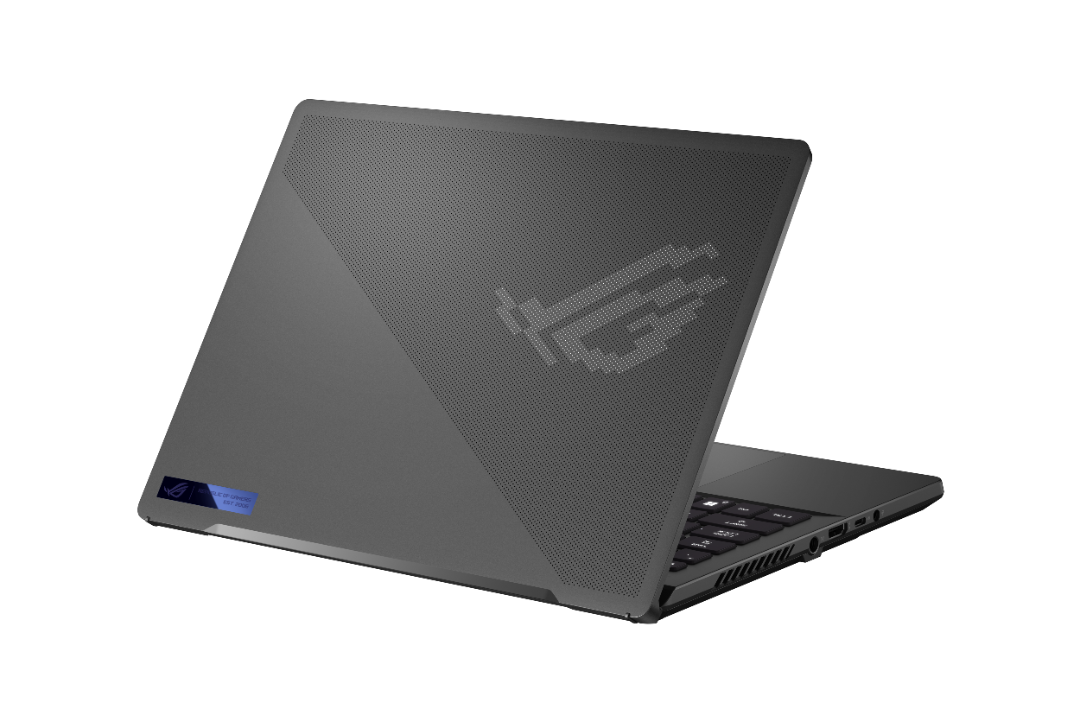
Next up, the ASUS ROG Zephyrus G14, which was a highly praised laptop in its first iteration, is also being refreshed for 2022. The latest model now comes with an AMD Ryzen 9 6000-series processor and AMD Radeon RX 6000S GPUs, the new graphics card designed for thin and light laptops like this. ASUS is using liquid metal to help keep these components cool and maximize performance. Having the latest AMD processors also means support for DDR5 RAM, which is included alongside up to 1TB of SSD storage.

ASUS ROG Zephyrs G14 (2022)

Similar to the Zephyrus Duo 16, the Zephyrus G14 comes with a new Nebula display, featuring Quad HD resolution and a 120Hz refresh rate with 3ms response times. On top of that, the screen has 500 nits of peak brightness and covers 100% of DCI-P3, so it’s also great to get some work done. It also supports Dolby Vision and Adaptive Sync, plus it’s Pantone-validated.

Just like previous models, the new Zephyrus G14 comes with an AniMe Matrix display on the lid, featuring 14,969 holes and 1,449 miniLEDs to create a custom pattern you can design yourself. This gives you one of the most personalized customization options you can find on a laptop.

ROG Strix SCAR and Strix G

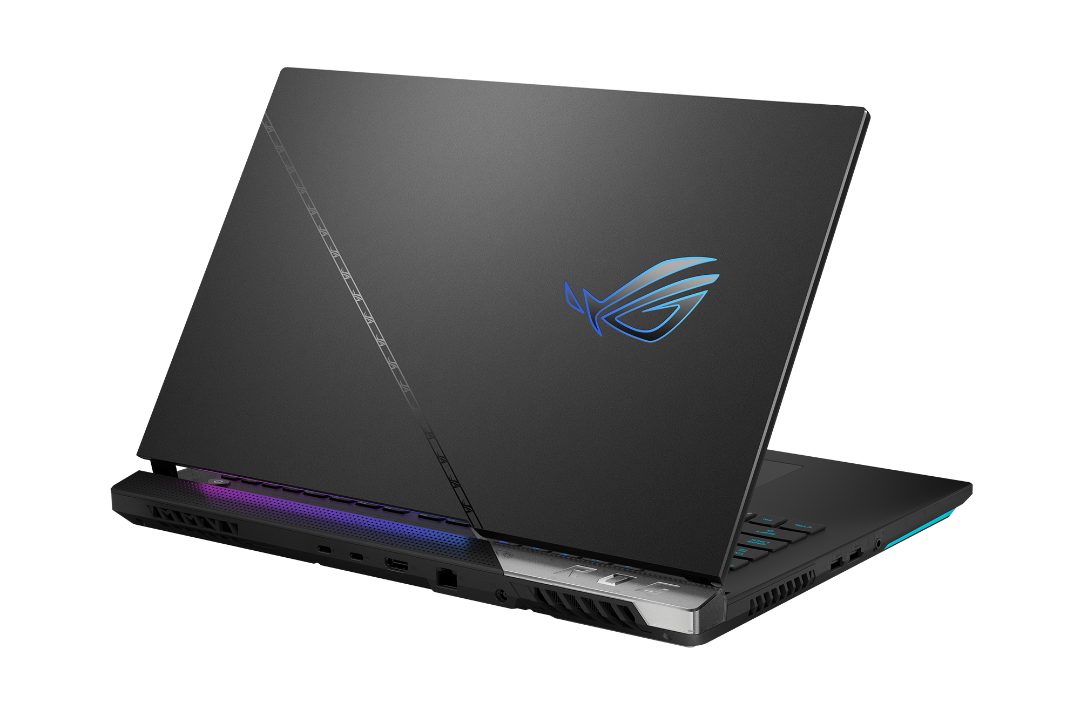
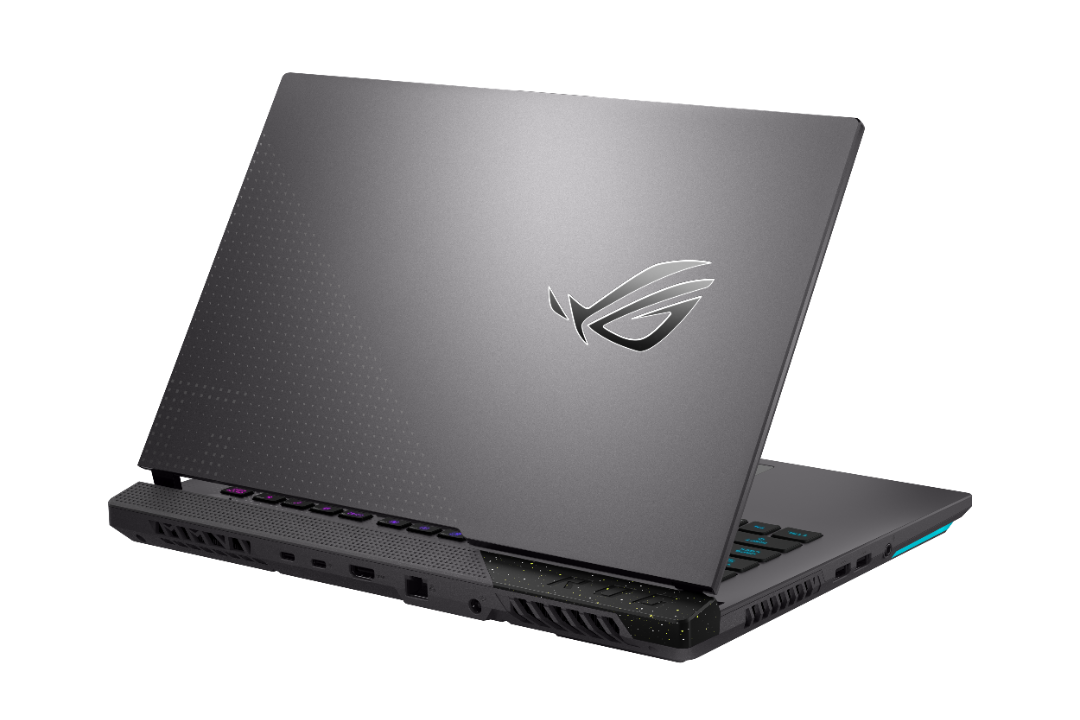
For top-tier gaming performance, the ASUS ROG Strix line is also getting refreshed for 2022 with new ROG Strix SCAR and ROG Strix G laptops. These laptops are very similar, but there are some noteworthy differences, including the processors.

ASUS ROG Strix SCAR 17 (2022)

The ROG Strix SCAR comes with up to an Intel Core i9-12900H processor, while the ROG Strix G comes with up to an AMD Ryzen 9 6900HX, both comparable processors from the two companies. They also both feature up to an NVIDIA GeForce RTX 3080 Ti GPU with 150W of power for graphics workloads. ASUS also mentioned DDR5 RAM and PCIe Gen 4 SSD support for the Strix SCAR, but these features should also be supported on the AMD variant.

Both laptops come in either 15-inch or 17-inch variants, and the display options are similar, too. That means the 15-inch laptops let you choose between Full HD 300Hz, Quad HD 165Hz, or Quad HD 240Hz (only on the Strix SCAR) panels, while the 17-inch versions come with either Full HD 300Hz or Quad HD 240Hz displays across both models. All the displays support Dolby Vision and have a 3ms response time for quick reactions. For audio, the Strix laptops all have four stereo speakers and Dolby Atmos support, plus two-way noise canceling.

ASUS ROG Strix G15 (2022)

The ASUS ROG Strix models come with a 90Wh battery and support 100W charging via USB Type-C so you can get some power back with a relatively compact charger. For use at home, you’ll still want to use the proprietary charger.

ASUS ROG Flow Z13

ASUS calls t ROG Flow Z13 the world’s most powerful gaming tablet, and we’re not going to doubt that since it’s likely the world’s only gaming tablet. However, that’s not to discredit the power packed into this device. It comes with up to an Intel Core i9-12900H CPU and an NVIDIA GeForce RTX 3050 Ti graphics card, meaning it can run just about any modern game you could want right now. It also comes with LPDDR5 memory to improve overall performance. Since it’s a tablet, airflow is less likely to be obstructed when it’s resting on its kickstand, so cooling should work even better than some traditional laptops.

ASUS ROG Flow Z13 (2022)

If that’s not enough, though, the Flow Z13, just like the Flow X13 convertible, supports ASUS’s ROG XG Mobile external GPU. In fact, there’s a new model of the ASUS ROG XG Mobile being announced at CES 2022, featuring an AMD Radeon RX 6850M XT graphics card. This is an alternative to the existing model powered by an NVIDIA GeForce RTX 3080, and both continue to be available if you want either one.

Aside from that, the ASUS ROG Flow Z13 comes with a 13-inch display with a 16:10 aspect ratio and two configuration options available: 4K at 60Hz or Full HD at 120Hz. Both screens have 500 nits of brightness, Dolby Vision support, Adaptive Sync and Pantone Validation, but the 4K panel is rated for 85% of DCI-P3 color coverage while the Full HD panel covers 100% of sRGB.

ROG Swift monitors

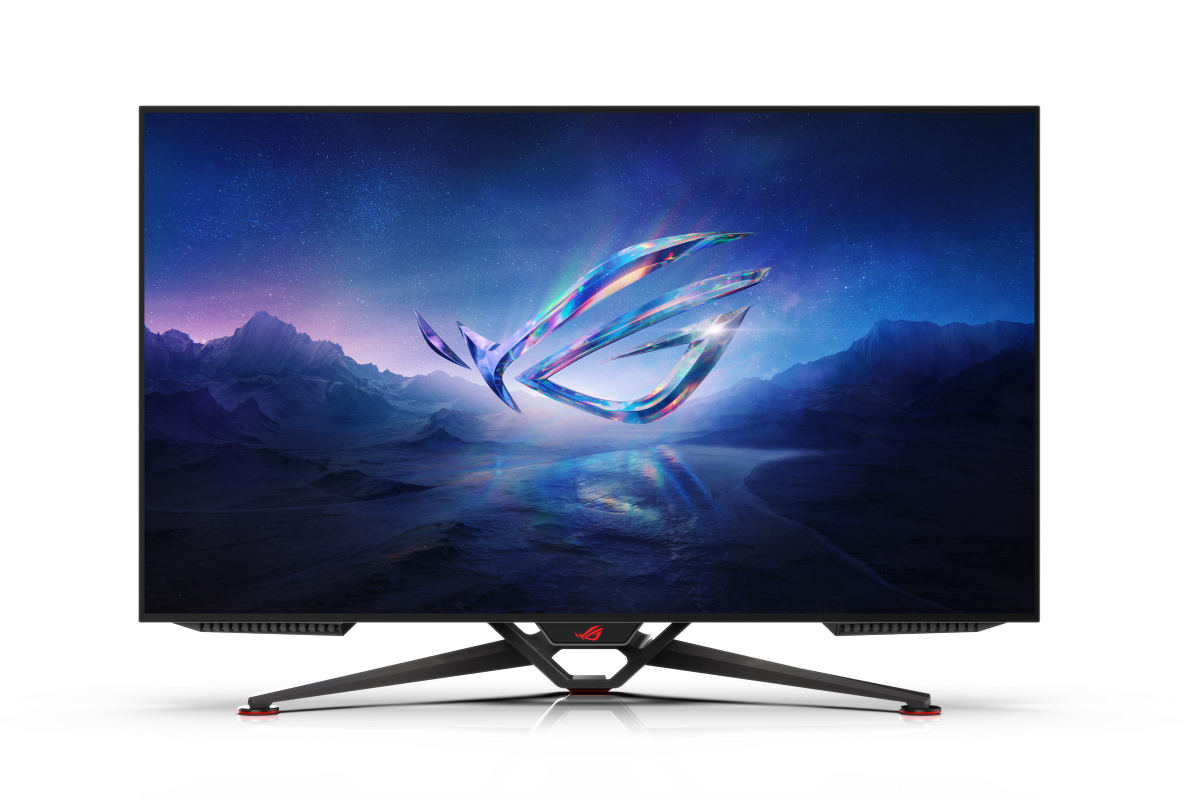
For desktop gamers, ASUS also introduced a handful of new ROG monitors for 2022. First off, the new ROG Swift OLED big-format gaming displays. These monitors come in 42-inch and 48-inch options, and they include the usual benefits of OLED like a 1,000,000: 1 contrast ratio, 0.1ms response times, true blacks, and vivid colors. Plus, they cover 98% of the DCI-P3 color space and have a color accuracy of Delta E < 2. They’re also packing 4K resolution and a 120Hz refresh rate.

ASUS ROG Swift OLED PG42UQ, PG48UQ

The panels can reach up to 900 nits of peak brightness, but ASUS is using a custom cooling solution to keep things running cool even at max brightness. ASUS is also using a anti-glare texture to prevent unwanted reflections that often affect OLED panels.

The displays come with HDMI 2.1 support so you can enjoy 4K 120Hz gaming on consoles in addition to PCs, plus some HDMI 2.0 ports and DisplayPort 1.4, so you have plenty of options.

On the more traditional side of things, there’s the ROG Swit 360Hz PG27AQN monitor. This monitor is designed for e-sports players that require super-fast reaction times, hence the 360Hz refresh rate. It’s actually one of first 1440p monitors with a 360Hz refresh rate, alongside a few others NVIDIA announced today. The ROG Swift PG27AQN also supports NVIDIA Reflex to reduce system latency and improve response times even further.

ASUS ROG Swift 360Hz PG27AQN

ASUS says it’s using a new type of liquid crystal that enables the display to have higher response times compared to other LCD monitors. It also has a dual-layer voltage driver to move the liquid crystals around, providing a smoother and more consistent image compared to single-layer voltage panels.

Other ROG peripherals

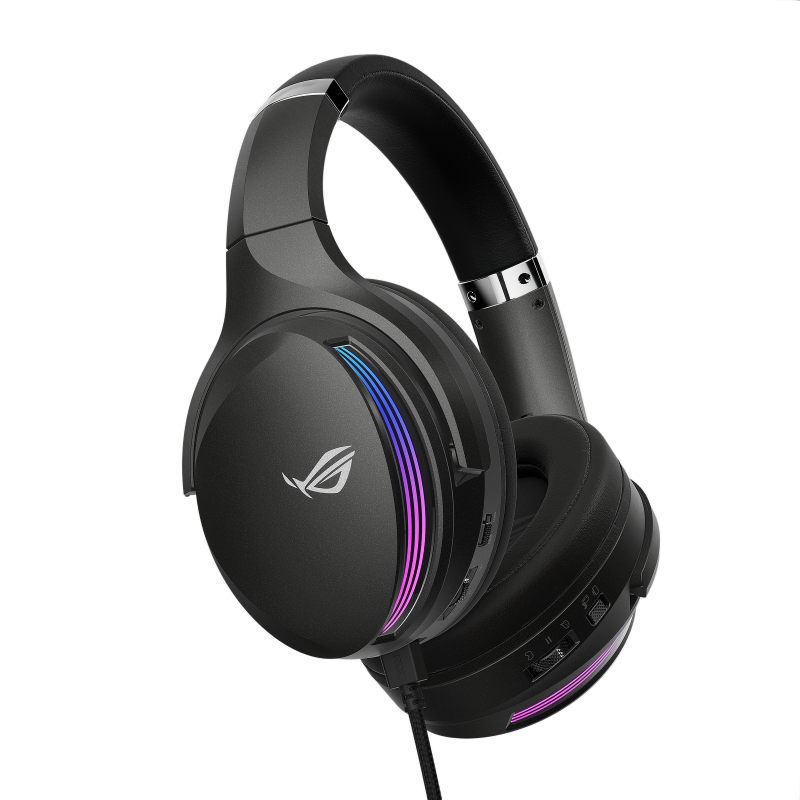
As for the rest of the announcements, there’s quite a lot. ASUS announced the new ROG Fusion II 500 and 300 gaming headsets, featuring virtual 7.1 surround sound and Quad DAC technology. The ROG Fusion II 500 supports 3.5mm, USB Type-C, and USB Type-A connections, while the Fusion II 300 lacks a 3.5mm jack. Additionally, the Fusion II 500 has a game chat volume control, which adjusts the balance of game audio and chat while gaming. That’s not available on the 300 model, either. Both models do have RGB lighting, though.
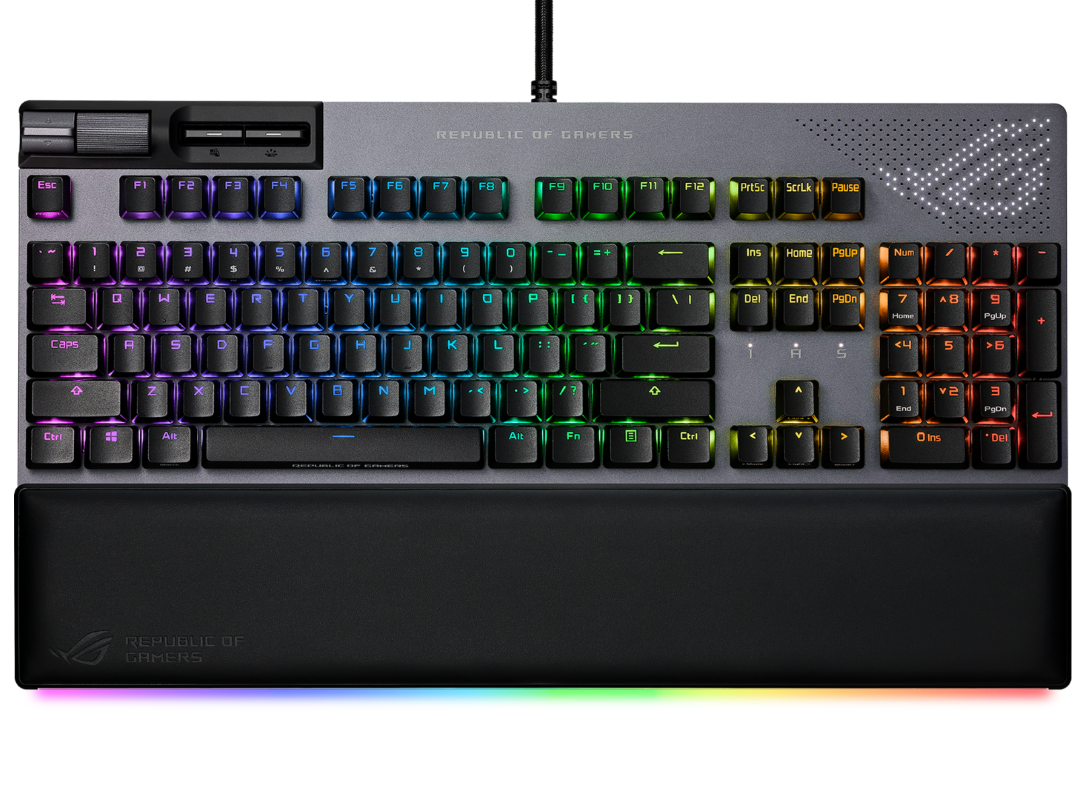
In the keyboard department, there are the new ROG Strix Flare II and Flare Animate II. The latter is the more impressive of the two, being the first keyboard to feature the AniMe Matrix technology debuted in the Zephyrus G14 laptop. This gives you a few LEDs in the top-right corner of the keyboard which you can customize to create any pattern you can fit in that space. Aside from that, the keyboard has an 8000Hz polling rate, swappable ROG NX mechanical switches, along with a switch stabilizer to minimize key wobble. The keyboard also has per-key RGB backlighting, and the wrist rest has a diffuser that extends the lighting to the bottom of the wrist rest.

The standard Strix Flare II lacks the swappable switches, the AniMe Matrix, and the RGB light diffuser in the wrist rest, but it’s the same otherwise. Instead of the AniMe Matrix panel, you get a ROG logo that’s color customizable.

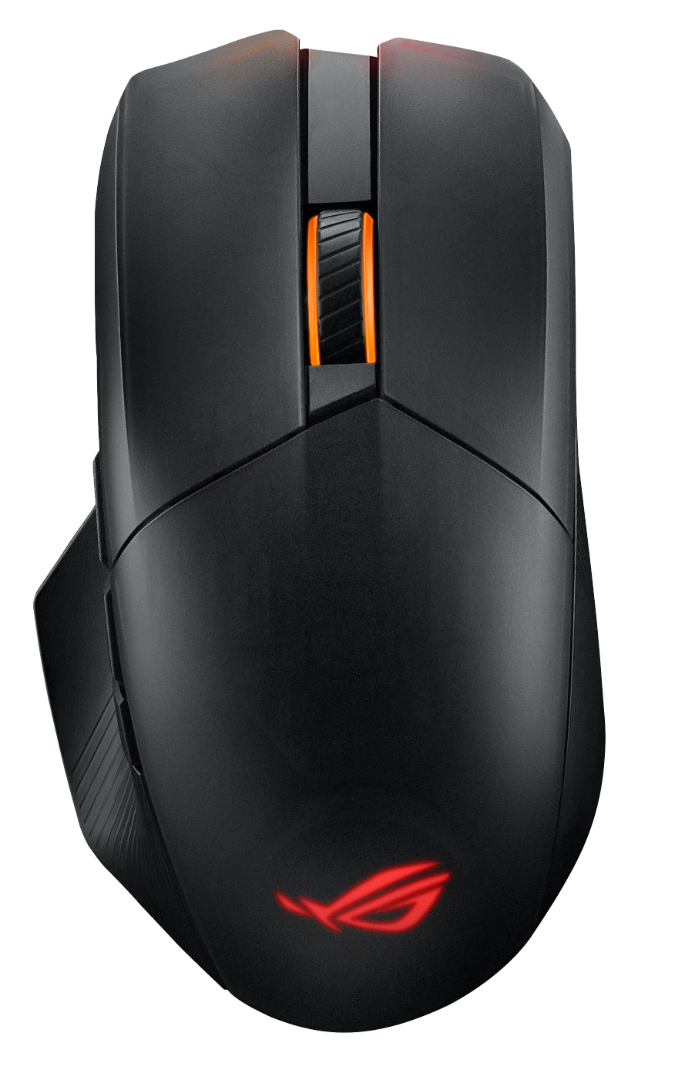
If you need a new mouse, ASUS also introduced the ROG Chakram X mouse. This mouse has a new optical sensor with a 36,000DPI and a 8000Hz polling rate for extra speed and accuracy. ASUS boasts a CPI deviation of just 1%, making it one of the most precise mice on the market.

The Chakram X mouse also has a new concave joystick on the side that’s easier to reach for additional control inputs, along with four buttons. The mouse features hot-swappable switches with three-pin mechanical and five-pin optical switches. The top cover is magnetic and can be easily removed to access the swappable switches and the storage bay for the USB RF receiver. Finally, it features a rechargeable battery via USB-C or with Qi wireless charging.

Finally, ASUS also announced a new gaming router, the ROG Rapture GT-AXE16000. ASUS says it’s the first quad-band Wi-Fi 6E router, featuring one band for 2.4GHz networks, two bands for 5GHz, and one band for the new 6GHz spectrum. It has a new Broadcom Wi-Fi chipset and CPU promising an increase of 18% in maximum throughput, and ASUS RangeBoost Plus promises up to 38% wider coverage with the Wi-Fi signal. For wired connections, the router includes two 10Gbps ports, one 2.5Gbps WAN port, and four 1Gbps ports.

ASUS didn’t say wen any of these products will be available, but we should hear more in the coming weeks and months.

The post ASUS ROG launches new gaming laptops and peripherals at CES 2022 appeared first on xda-developers.


from xda-developers https://ift.tt/3HCjvIg
via IFTTT